
Anyone who has been on this planet for any length of time knows that sleep is critical, but how many people have been educated on how much their environment can impact quality and quantity of sleep? It’s possible to even have the best sleep tea, bedtime rituals, etc. and if there is clutter in your bedroom or there are excessive distractions or you live in a noisy area, you will still likely have challenges with falling asleep, night awakenings, and returning to good sleep.
In this fast-paced, always on, and chaotic world we live in, your bedroom should be a great personal retreat from the day, a true, relaxed environment of letting go, unplugging, and settling into sleep. Fortunately, you don’t have to buy new bedroom furniture, or do a remodel to turn it into a peaceful bedroom sanctuary. Let’s take a look at some ideas and tips for adding serenity to your bedtime and bedroom routine, and getting the quality rest and restoration that sleep provides.
How to Set the Scene And a Nightly Wind-Down Routine?
The first approach to achieve a calming bedroom environment starts with visuals and what it presents to you. Our brains are quick to respond to our environment and creating a calming visual, such as your bedroom, cues your brain that is time to relax will be helpful.
1 – Set the Mood with Soothing Colors
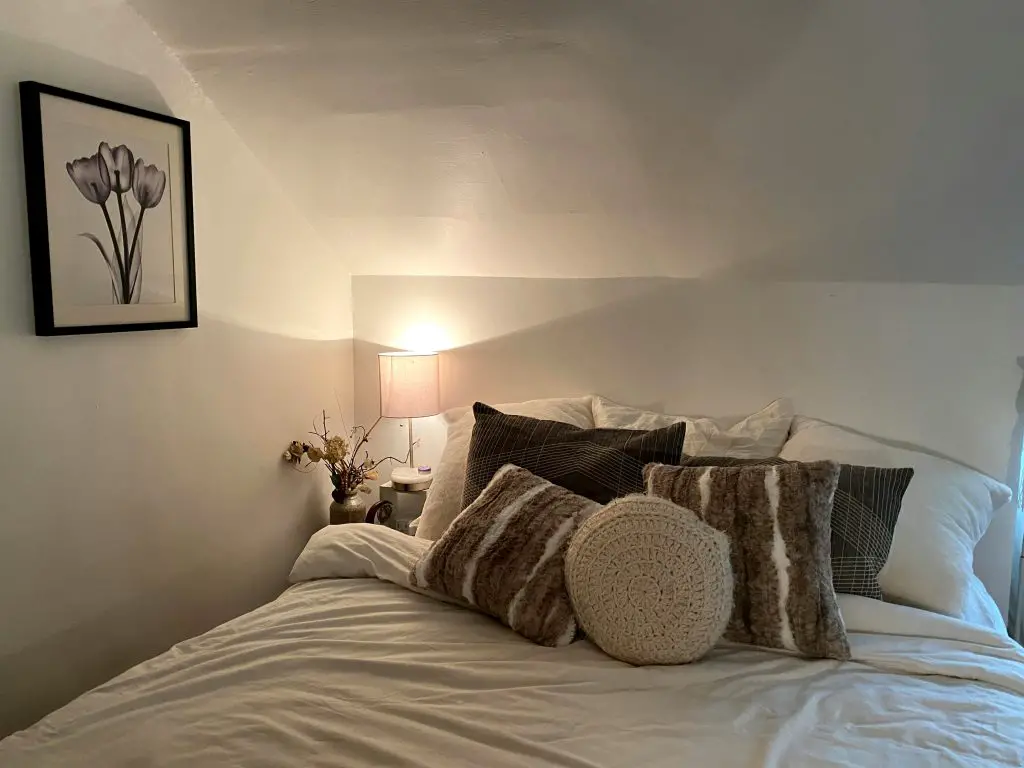
One of the easiest and greatest impact ways to confirm a calming environment is with color. The color scheme you surround yourself can have significant bearing on your mood, and therefore your sleep quality.
For instance bold reds, bright yellow are energy driven, stimulating colors suggesting energy, excitement, and duration indicating no sleep, if there were aesthetics that would allow you to ignore them. Select muted colors such as sage green, light gray, beige, or dusty blue. Select 1 or 2 base colors and select muted color using your base color. Avoid any contrasting or monotonous colors as this creates competing noise and distractions.
2 – Create Comfort Through Texture

In the process of creating a calm bedroom, texture embedded in all of the bedding can be as important as color. A space should not only look restful and cozy, it should feel restful and cozy. Each variation of material creates warmth and softness that makes you want to return to your bedroom. The first thing to create a “cozy” bed is to tell your sheets/bedding that it deserves quality, high thread count sheets so your bed can be the real-life version of a cocoon. A throw blanket or quilt at the foot of the bed adds warmth and a visual fulfillment.
If you have a hard paved floor, a large soft area rug underneath can also add some “cozy” factor by providing texture and grounding the bed, instead of appearing like an cold piece of furniture that is floating on a flat surface. Lastly, to help keep the cozy bedroom vibe, finish off your cozy bedroom with blackout curtains in thick textured fabrics to completely block light and noise.
3 – Soften the Space with Thoughtful Lighting

Lighting can also play a big role in creating an unwinding bedroom environment. Overhead art center lighting is usually too bright and obstructive, particularly in the evening, when our body is required to start settling down for the night. If you think about lighting colors, you will notice we want our bedroom light to match the slight fade of natural light that occurs during twilight.
You would think that simply replacing the very cool white overhead lights with warm color LED bulbs would lighten the burden of being bright, and ambient. A small lamp with a dimmer switch, or smart bulb enabled by an app is a nice option to match the rooms needs at any time of day.
A final option to relaxing bedroom lighting is to add string lights, or a salt lamp into the space for a softer ambient lighting. Of note, establishing a pattern of dim or lower lights in the space for at least 1 hour before bed can support the natural melatonin production function of the body.
Also, to add an extra level of grounding and tranquility within the bedroom or sleeping space we want to add natural items. Adding a plant or two in the space as an interior option provided air purification, in addition to life and relaxation.
4 – Use Scent to Signal Rest

One unwinding tool that is very simple but effective is hands-on scent therapy. Scents are connected directly to the nervous system, just like certain essential oils will signal your body to relax. You may want to diffuse lavender or chamomile essential oil before bedtime, for about an hour, in your healthy sleep environment.
This will start priming your emotional body for sleep. You might want to settle in to relax using a soothing pillow spray with cedarwood, nice sandalwood, and something that settles the nervous system. If you shower in the evening instead of soaking in tub, you could use about 6–8 drops of eucalyptus oil in the steam of the shower to help create a calming spa environment for your mind and body to unwind toward sleep.
5 – Minimize Screen Time Before Bed

Setting boundaries with electronics/screens is just as important as any relaxation elements for your bedroom environment. The blue light generated by our phones, tablets and televisions impacts our body’s natural melatonin, the hormone that helps to regulate our sleep. The mental stimulation that is created by scrolling or watching television maintains your brain in a heightened state of stimulation far past the time when you should be shutting off your brain!
So for improved sleep, make it a habit to keep your phone outside of your bedroom space, or across the room (to remove temptation). Instead of being in front of a screen, pick up a book, journal, or meditate and do some REALLY light stretching to help calm your mind. You may want to also consider using an alarm clock instead of your phone and help keep your bedroom as screen free zone for sleep and relaxation.
6 – Incorporate Soothing Sounds
Some people additionally state that sound can give them a nice clear boundary between day and night, which helps them to “fall” into sleep. More specifically, picking sounds that are soothing, consistent, and fairly repetitive is helpful; something that allows your brain to tune into the sound without being distracted by it.
For example, listening to white noise, or ocean waves, or soft ambient music can provide a calming backdrop for you that registers that it’s time to de-stress from the day. You could also try a sleep app that has ambient nature sounds like rainfall or wind in trees, that so many people love, and find to be relaxing. If complete silence is anxiety removal for you, even something as simple as a fan providing gentle airflow will give you a solid sound to help you sleep and make it cooler as you sleep.
7 – Organize with Calm in Mind
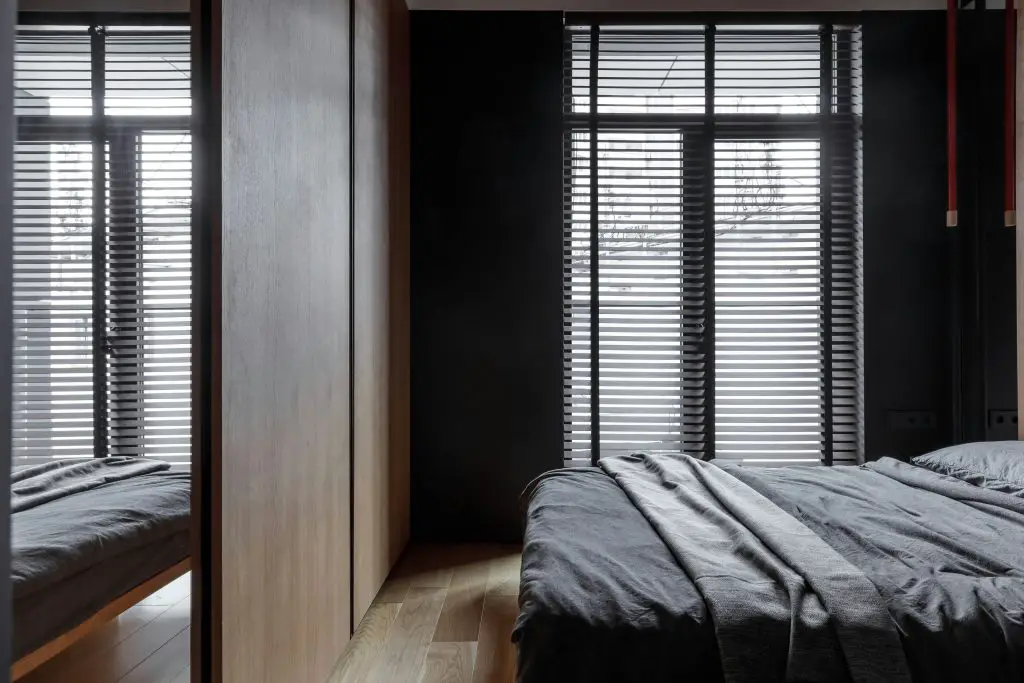
Consider the organization portion of the declutter to be adding a space of serenity to your environment. Choose functional and visually pleasing storage options. When it comes to organizing your nightstand you should do your best to keep everything essential. Maybe you have only two items, for example, a book, a water glass, and a lamp, which would leave room for one or two peace-based decor options like a crystal or family photo.
Another surprisingly powerful habit is making your bed each day. This single habit is simple, yet, can provide a positive priming to your entire day, while also providing a warm and welcoming place to return to at the end of the night.
Conclusion
We often underestimate the space we sleep in and the connection it has to wellness (which we shouldn’t). The bedroom is the space where we rest, reset, and recharge; therefore it is equally important as the rest of our self-care. Don’t panic: you don’t need to outlay a ton of money and remodel the space to create a calming sanctuary.
To get started, it is mostly intentional. For instance, use soft colors, textures that appeal to your sense of comfort, scents that calm, declutter some things and in no time at all you have taken your bedroom and helped it becomes something that resembles a sanctuary. With a calming bedtime routine, you’ll definitely be on your way to higher quality deeper relaxation, and restoration of your batteries.
So this evening before bed, take a few minutes to consider how you might make your bedroom calm and open. You’ll surely get a peaceful night and perfect sleep.

Numrah Fareed is a freelance writer and home organization enthusiast with a passion for practical, eco-friendly living. When not typing away at her desk, she’s experimenting with DIY cleaning hacks and helping readers simplify their routines one tip at a time.
Wow, awesome blog layout! How long have you been blogging for? you made blogging look easy. The overall look of your website is wonderful, let alone the content!
Comment awaiting moderation.